Skip to content
Topic8 entries

Getting started

Understand how a modern car works, what maintenance, diagnosis, and repair each mean, how to read an owner manual and service schedule, and what an owner can safely check.

  1. Updated August 24, 20269 min read

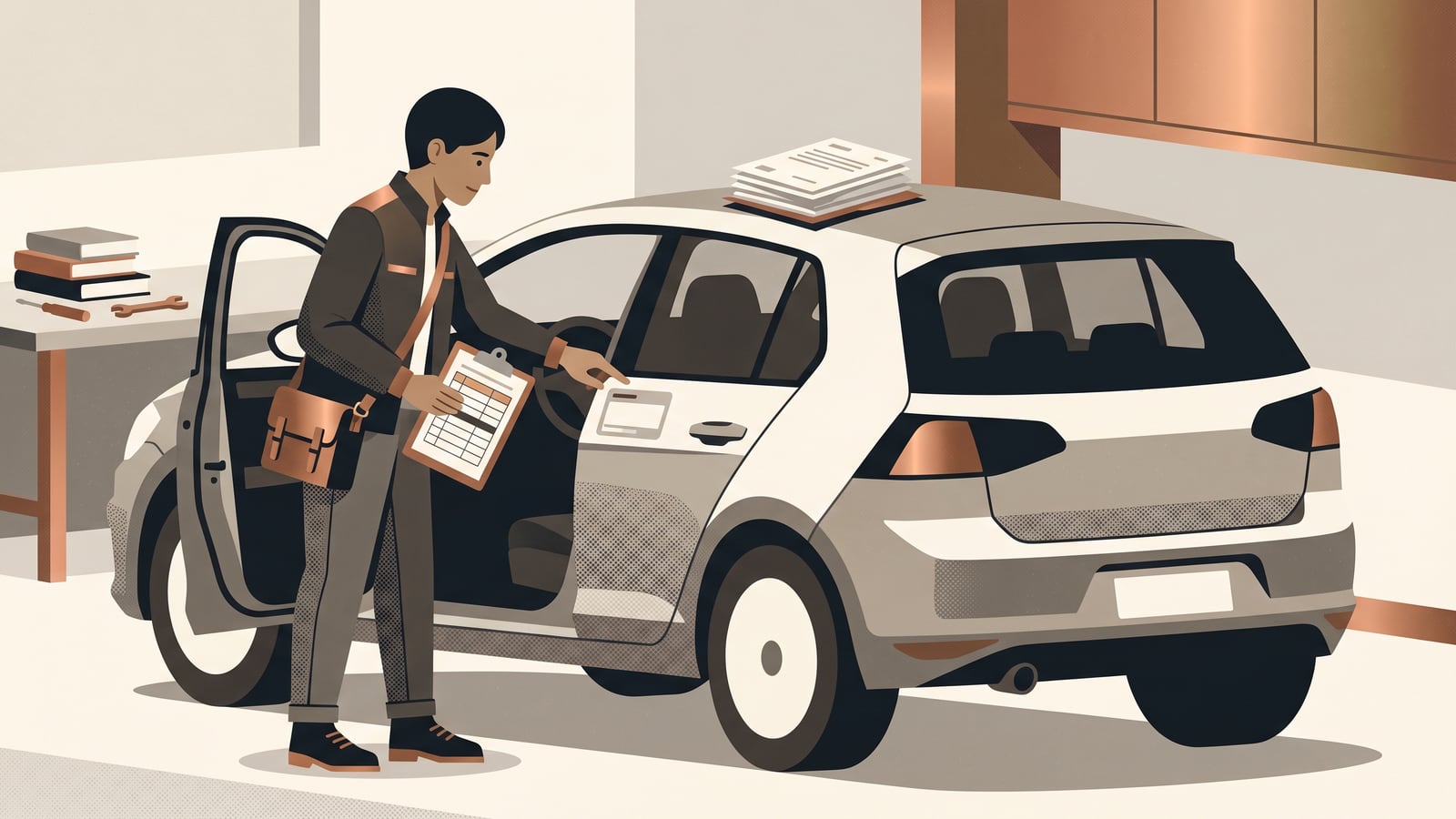
    How to Identify a Car Correctly Before You Rely on the Answer

    Before you trust a manual, a recall search, a parts match, or a workshop conversation, build a compact record of what a real source actually says about the car, label where each detail came from, and leave anything unconfirmed as unknown rather than guessing.
  2. Updated August 24, 202613 min read

    How to Understand and Manage a Car: Build Your First Ownership Baseline

    New or uncertain car owners can build a first ownership baseline by identifying the exact vehicle, matching information to it, recording observations without diagnosing them, and preserving decisions and paperwork. Includes a copyable checklist with a worked example.

  3. Updated August 24, 202614 min read

    Maintenance, Condition Checks, Diagnosis and Repair: Which Stage Comes Next?

    Scheduled maintenance, a condition check, diagnosis and repair answer different questions and should produce different records. This guide helps you work out which stage applies before you authorise anything, with a four-route decision aid, four worked situations, and a copyable workshop prompt.

  4. Updated August 23, 202612 min read

    When Car Work Needs Professional Tools or Expertise: Find the First Boundary

    This decision guide gives everyday owners a seven-step screen — hazard, exact vehicle information, safe access, competence, equipment, diagnostic certainty, verification — to find the first unresolved boundary in a proposed car task, plus three worked hypothetical cases showing how the outcome changes.

  5. Updated August 18, 20266 min read

    Check UK Vehicle Safety Recalls: Which Official Route to Use

    Use the registration-based GOV.UK route when you know the registration, the manufacturer-model-year route when you don't, and contact the manufacturer or dealer when the public information is absent, mismatched, or unclear. Treat any result as a starting point, not proof of complete history or finished work.