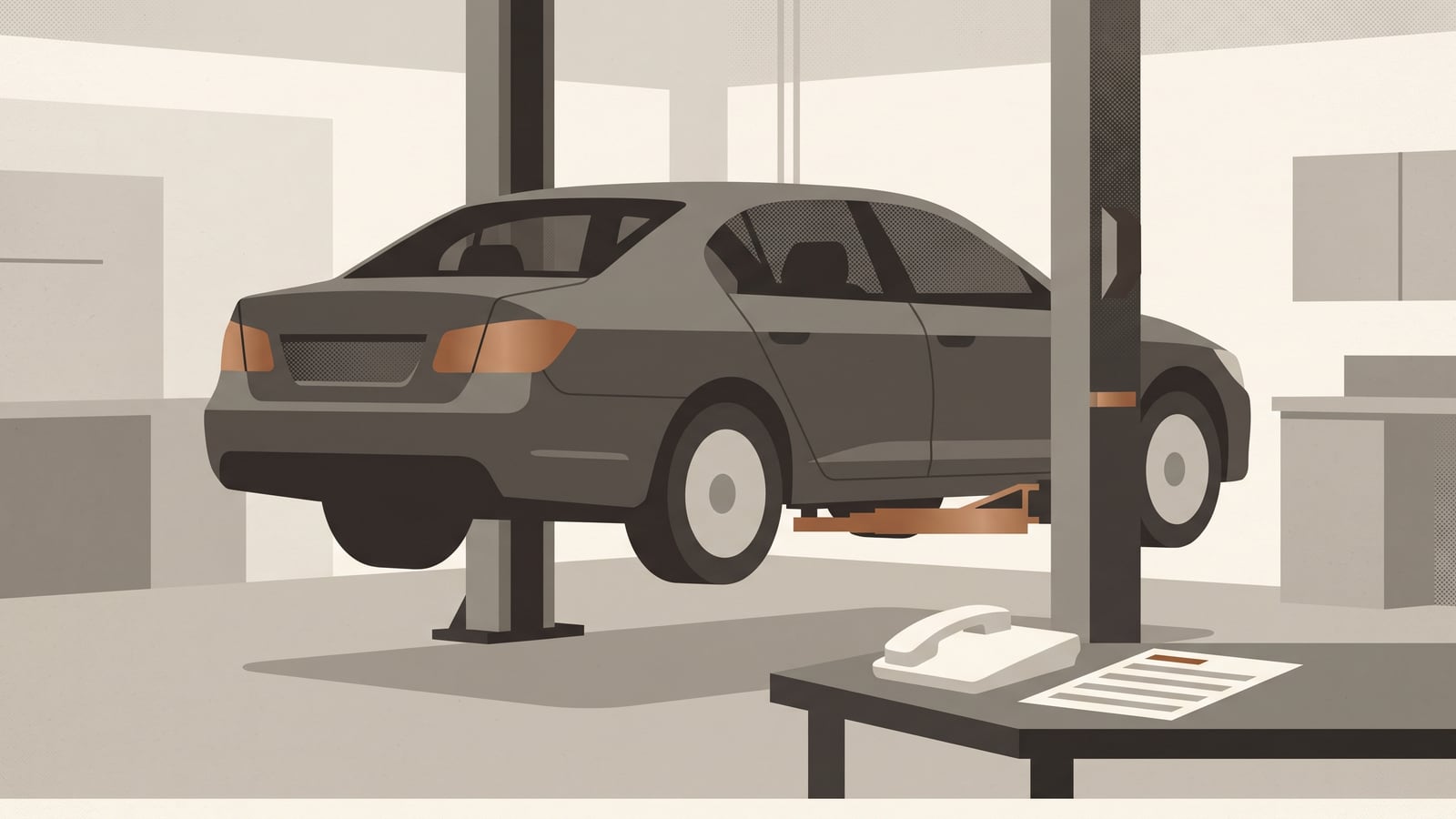
How Additional Repair Work Should Be Authorised
When a garage phones during a repair to ask for more work or more money, you can approve, cap, defer, or pause — this guide shows how to decide and how to keep a written record of what you agreed.

Understand · Maintain · Decide
Evidence-led guidance for the decisions every car owner faces — reading a service schedule, judging a symptom, understanding a diagnosis, and reviewing a repair estimate before you approve the work.
Understand how a modern car works, what maintenance, diagnosis, and repair each mean, how to read an owner manual and service schedule, and what an owner can safely check.
OpenBuild and follow a reliable maintenance plan: time- and mileage-based intervals, fluids, filters, belts, brakes, batteries, and care under severe or short-trip use.
OpenRecognise symptoms, judge urgency conservatively, record useful evidence before contacting a workshop, and understand how a proper diagnosis actually works.
OpenWork effectively with a repair shop: choosing one, describing a problem, reading and comparing estimates, authorising extra work, and controlling the cost of ownership.
OpenWhen a garage phones during a repair to ask for more work or more money, you can approve, cap, defer, or pause — this guide shows how to decide and how to keep a written record of what you agreed.

Aging-car costs arrive unevenly, not as a smooth average. This guide gives you a five-bucket forward budget, a copyable 12-month template, a worked example with cash-timing, non-negotiable safety stop conditions, and a repair-versus-replace framework based on forward cash flow rather than the car's market value.

Screen for immediate driving hazards first, then record what you actually observed — sound, feel, smell, sight, and the exact conditions — using a copyable symptom template and a worked example, so a technician can start diagnosing instead of guessing.